Event Cameras for Fast Localisation
Event cameras respond to changes in brightness with microsecond latency and very high dynamic range. We build localisation methods that keep these advantages rather than turning events back into frames.
Why it matters
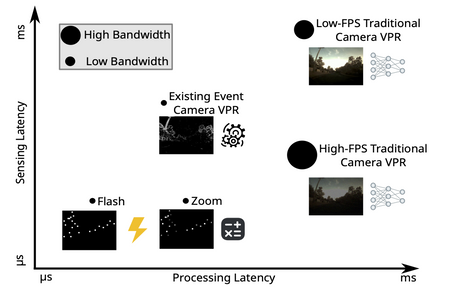
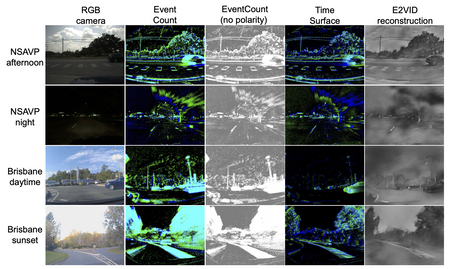
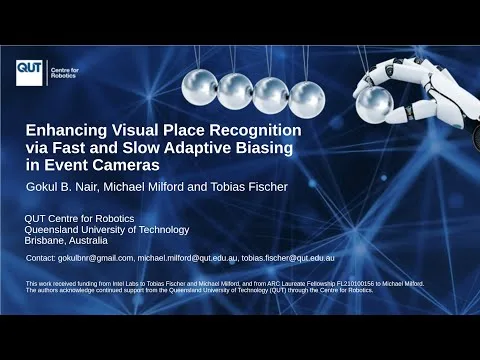
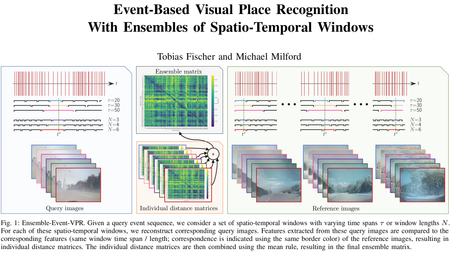
Our 2020 paper on event-based place recognition with ensembles of temporal windows was among the first to show that event cameras can localise robots across day and night. Since then the group has shown that a surprisingly small number of well-chosen events is enough, that the camera’s own biases can be adapted on the fly, and that place recognition can run in under a millisecond.
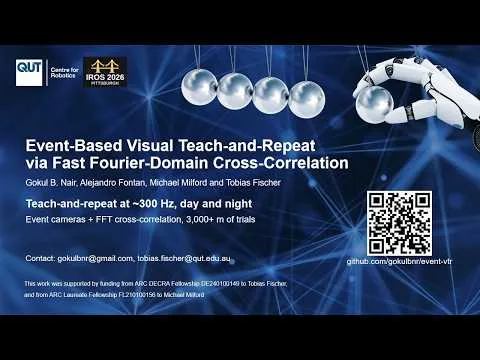
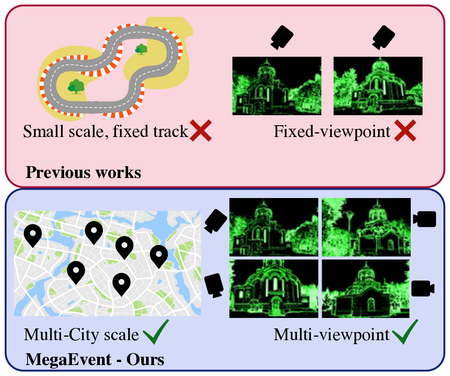
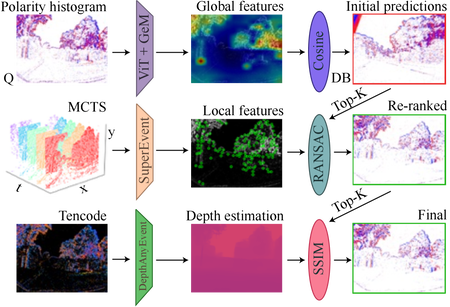
Recent work extends this to teach-and-repeat navigation with event cameras, multi-viewpoint geo-localisation across cities, and global-to-local feature matching for events.
Team
Members of my group at the QUT Centre for Robotics and close collaborators.

Lead
 Michael Milford
Collaborator
Former postdoc

PhD student

PhD student

Former PhD student
 Alejandro Fontan
Collaborator

More projects
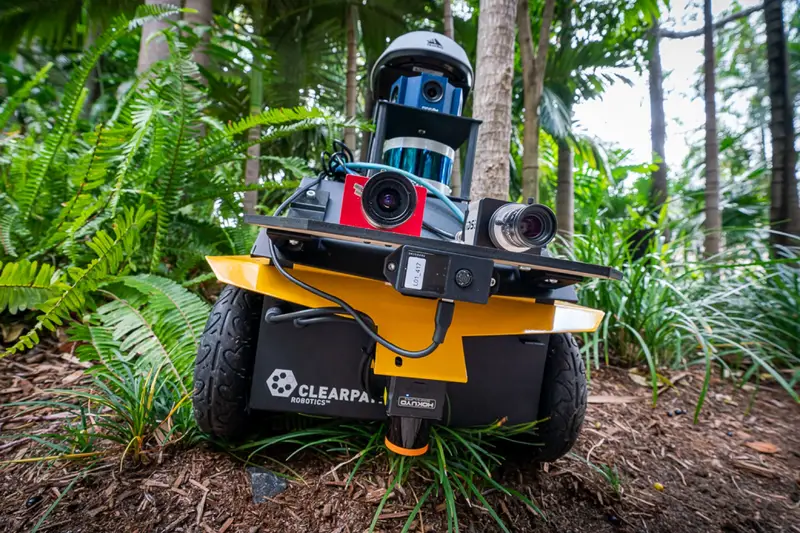
Brain-Inspired Positioning for Fast, Energy-Efficient, Resilient Robotics
The world’s first sub-millisecond, energy-efficient robot positioning system, using brain-inspired sensing and computation that only happens when the scene changes.
Learn More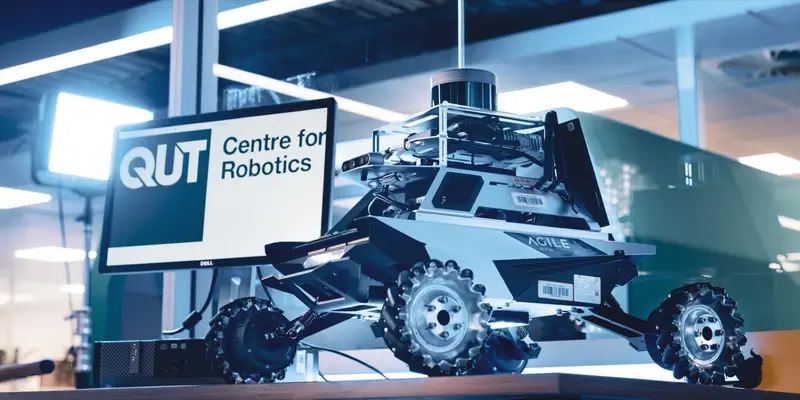
Adaptive and Efficient Robot Positioning Through Model and Task Fusion
Fit-for-purpose positioning systems that continuously adapt to diverse and changing environments, and are energy efficient enough for edge devices.
Learn More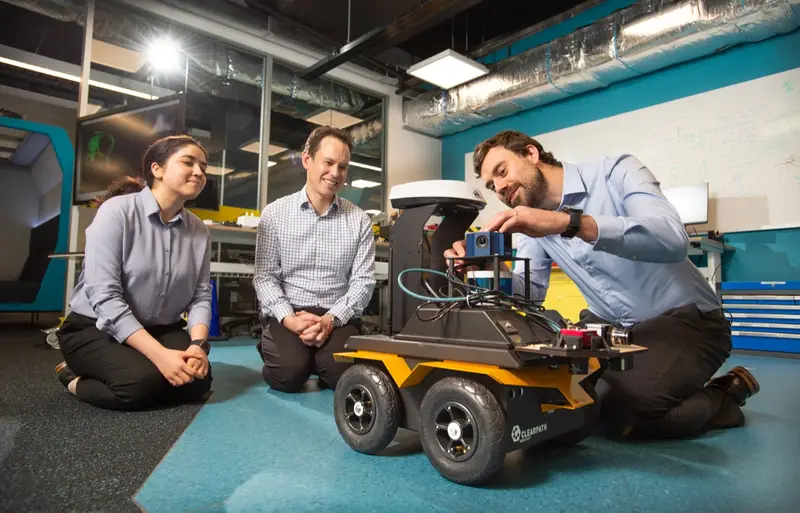
Neuromorphic Place Recognition
Spiking neural networks that recognise places on neuromorphic hardware, using a fraction of the usual energy.
Learn More