Neuromorphic Place Recognition
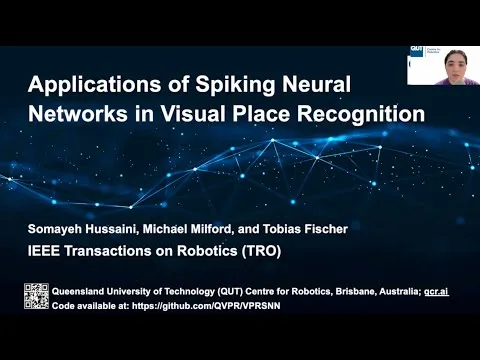
Visual place recognition is a fundamental capability underlying any mobile autonomous vehicle and robotic system. We tackle it with spiking neural networks on neuromorphic hardware.
About the project
Two grants from the Intel Neuromorphic Research Community supported this work: Spike-based Visual Place Recognition using Intel’s Loihi and Active, adaptive and predictive robot localization.
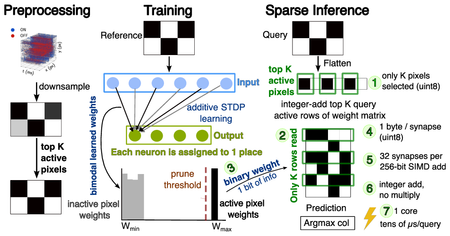
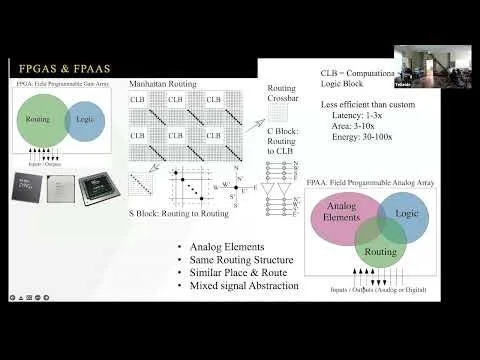
Various feature descriptors have been proposed for conventional place recognition, with different advantages ranging from global techniques that are highly viewpoint invariant to local techniques that achieve superior precision. However, it was unknown whether these properties continue to exist when processed in a sparse manner suitable for spike-based processing on Loihi.
The follow-on project tackled open problems that are particularly well suited to the bottom-up promise of neuromorphic computing, namely continual, adaptive learning suitable for power-constrained closed-loop robot control. Place recognition needs both “slow” adaptation (e.g. urban vs rural, day vs night) and “fast” adaptation (e.g. sudden onset of rain, entering tunnels).
Outcomes
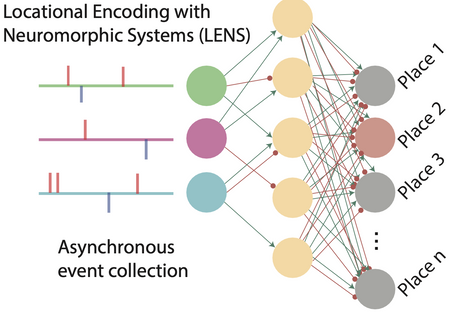
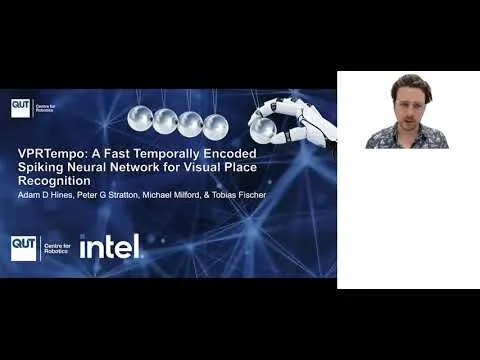
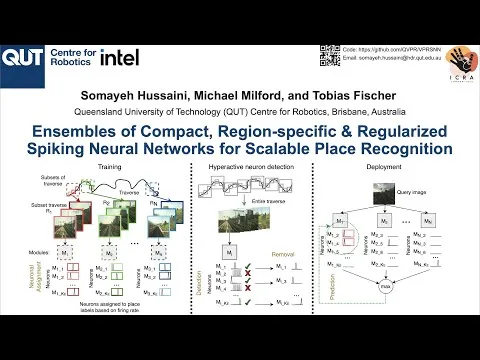
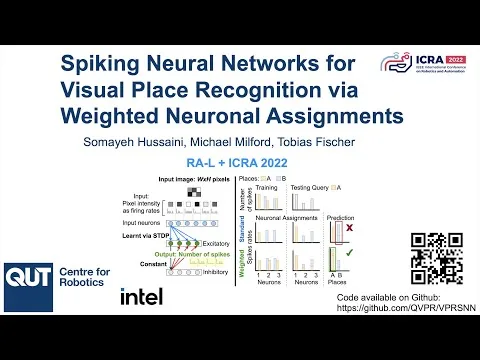
The work produced some of the first spiking neural networks for visual place recognition, scaled them from small regions to entire cities with ensembles of compact networks, and led to LENS (Science Robotics, 2025), a compact neuromorphic system for ultra energy-efficient, on-device robot localisation. I also contributed to NeuroBench, the community framework for benchmarking neuromorphic computing algorithms and systems.
Team
Members of my group at the QUT Centre for Robotics and close collaborators.

Lead
 Michael Milford
Collaborator

Postdoc
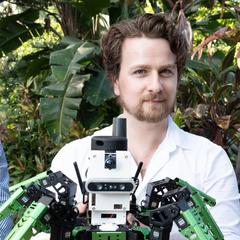
Former postdoc
More projects
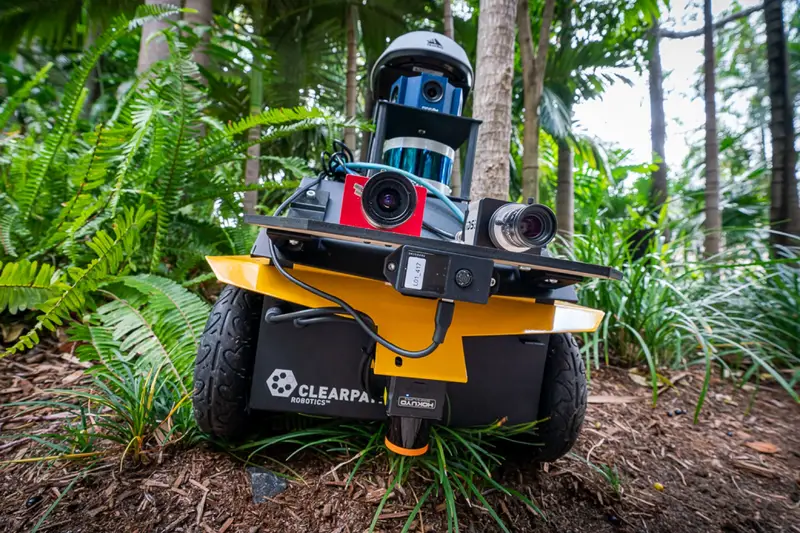
Brain-Inspired Positioning for Fast, Energy-Efficient, Resilient Robotics
The world’s first sub-millisecond, energy-efficient robot positioning system, using brain-inspired sensing and computation that only happens when the scene changes.
Learn More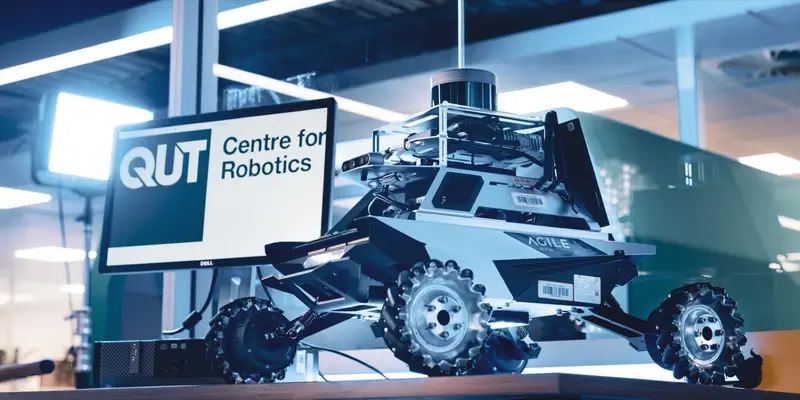
Adaptive and Efficient Robot Positioning Through Model and Task Fusion
Fit-for-purpose positioning systems that continuously adapt to diverse and changing environments, and are energy efficient enough for edge devices.
Learn More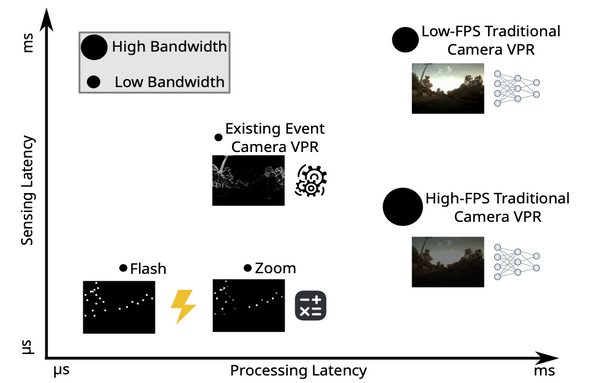
Event Cameras for Fast Localisation
Sensors that report only what changes, for sub-millisecond localisation in difficult lighting.
Learn More