Brain-Inspired Positioning for Fast, Energy-Efficient, Resilient Robotics
Positioning is the silent enabler of autonomy. Robots and vehicles must know where they are to move safely and make decisions.
About the Fellowship
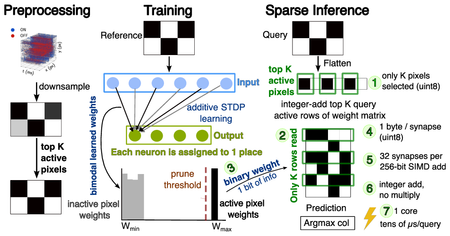
This project will develop the world’s first sub-millisecond, energy-efficient robot positioning system for reliable positioning in complex and resource-limited environments. It develops a novel brain-inspired approach where sensing and computation occur only when the scene changes, mirroring how neurons fire on meaningful events to maximise efficiency. By combining event-driven sensing with spectral processing, the system will achieve cooperative, ultra-low-latency positioning in challenging domains such as coral reefs, space, mine sites and defence.
The problem
Current localisation systems remain unreliable, slow and energy-intensive. Satellite navigation (e.g. GPS) fails underwater, indoors and in space, while camera- and LiDAR-based methods struggle under visual degradation, dust or intermittent communication. As a result, robots still cannot operate resiliently in the dynamic, remote environments where Australia most needs them: coral reefs, disaster zones, mine sites and future space missions.
The opportunity
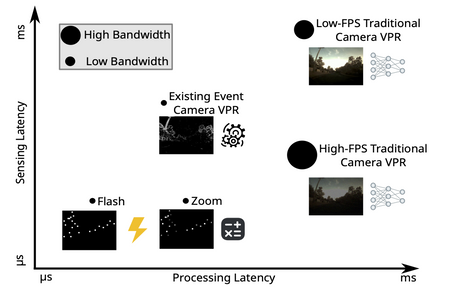
Neuromorphic computing provides a new approach inspired by how the brain processes information: neurons activate only when something changes. Combined with event cameras, fast bio-inspired “silicon retinae” that detect changes in brightness rather than capturing full images, robots can sense motion and light variations in real time, processing only what changes instead of every frame.
Expected outcomes include new algorithms, open benchmarks, demonstrator platforms and a national roadmap, strengthening Australia’s capability in safe, low-emission, long-duration autonomy. PhD scholarships are available.
Research programs
How the project is organised.
Neuromorphic foundations for energy- and latency-optimised localisation
The theoretical and algorithmic foundations for next-generation asynchronous neuromorphic positioning, combining sparse spectral processing, predictive sensing and hardware acceleration to achieve sub-millisecond updates with millijoule-level energy use.
Resilient and sustainable deployments of neuromorphic localisation
Translating neuromorphic positioning into resilient deployments for long-duration, collaborative operation in energy-, bandwidth- and environment-constrained settings where conventional systems fail.
Global platforms and community adoption
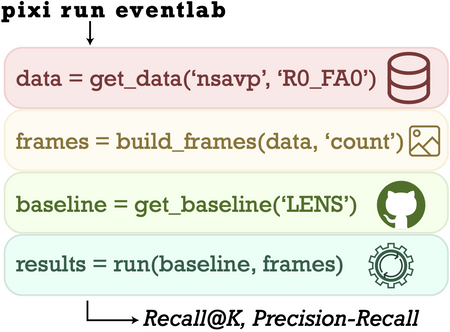
Embedding the advances in the global ecosystem that drives the field forward, by expanding RoboStack and VSLAM-LAB with neuromorphic algorithms, adaptive controllers and datasets.
More projects
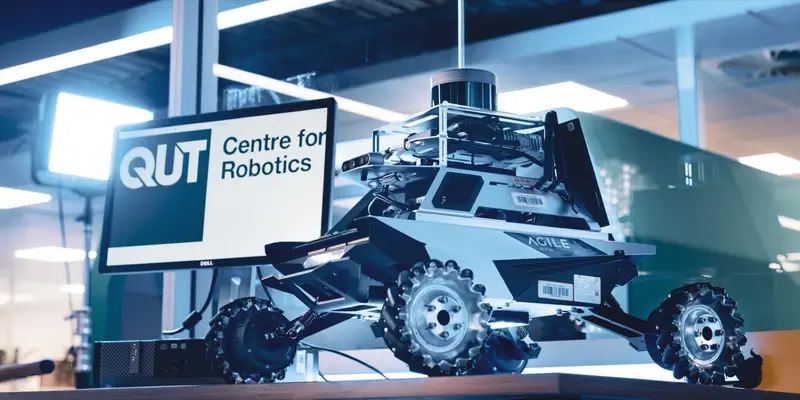
Adaptive and Efficient Robot Positioning Through Model and Task Fusion
Fit-for-purpose positioning systems that continuously adapt to diverse and changing environments, and are energy efficient enough for edge devices.
Learn More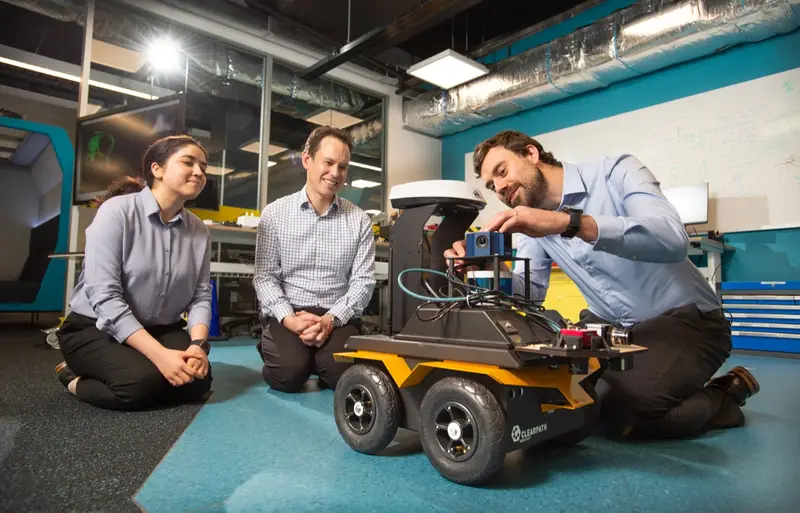
Neuromorphic Place Recognition
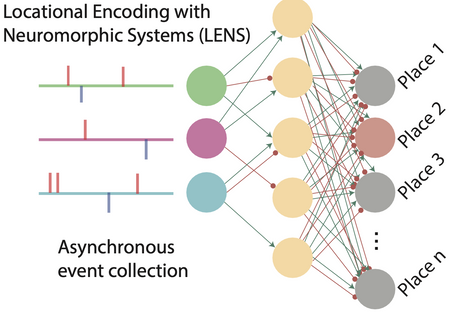
Spiking neural networks that recognise places on neuromorphic hardware, using a fraction of the usual energy.
Learn More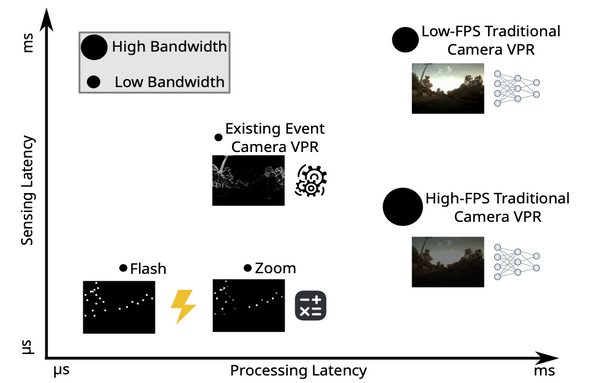
Event Cameras for Fast Localisation
Sensors that report only what changes, for sub-millisecond localisation in difficult lighting.
Learn More